Hypostyle
The Third Pylon
|
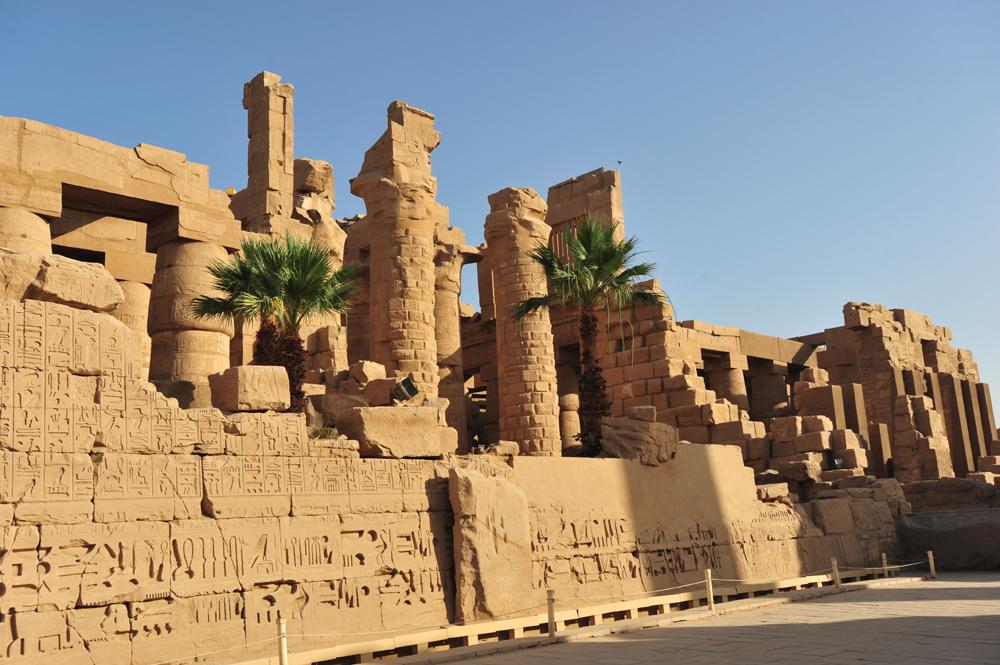
The Third Pylon was built a few decades before the Hypostyle Hall in the reign of Amenhotep III (ca. 1390-1352 BCE). Although Amenhotep III may have built the Third Pylon earlier in his reign, he did not inscribe it until the last decade of his reign during preparations for his first Heb-Sed festival, the pharaonic jubilee celebrated after 30 years on the throne. The Pylon is most famous for what was inside it, not what Amenhotep carved on its walls. When it was restored in the early 1900s, several hundred blocks from earlier buildings were discovered inside. Enough was found to reconstruct a number of smaller monuments, including the lovely "white chapel" of the Middle Kingdom pharaoh Senwosret I (ca. 1965-1920 BCE) and the "red chapel" of Queen Hatshepsut (ca. 1472-1458 BCE) which has just been rebuilt. These and other "stuffing" from the Third Pylon make up most of the Open Air Museum today.
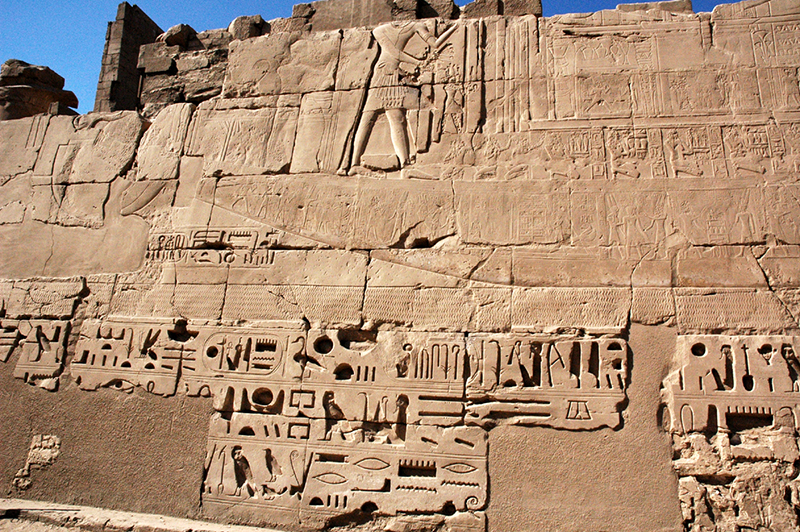
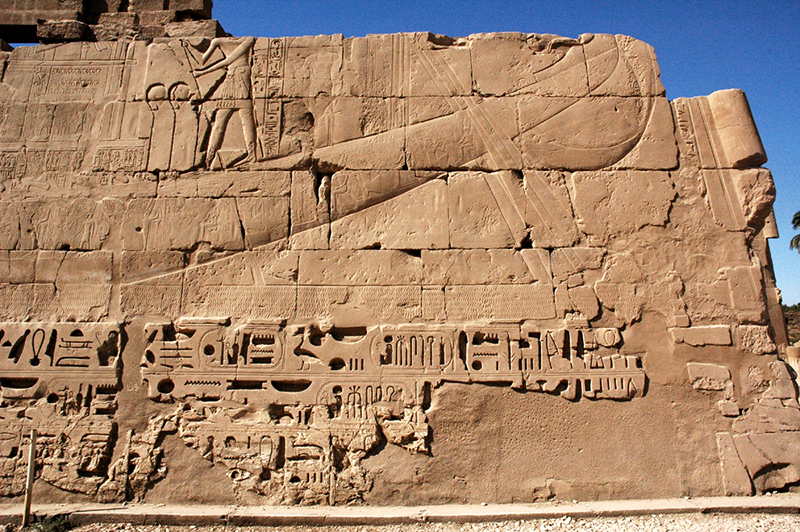
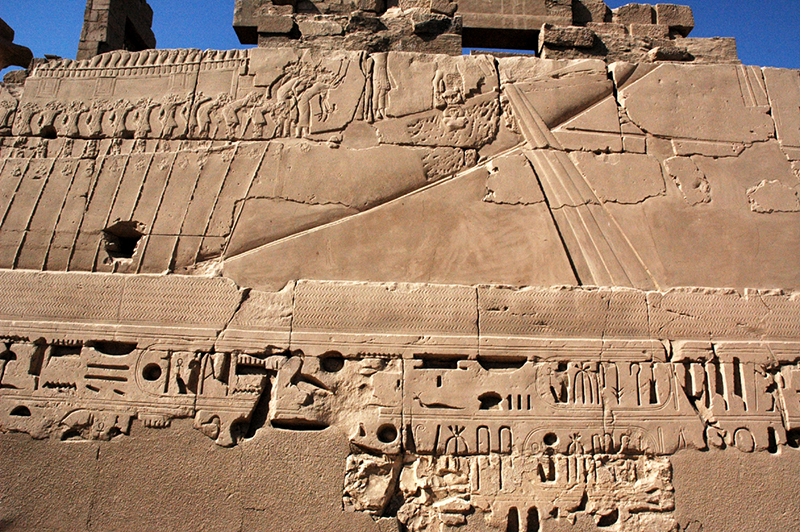
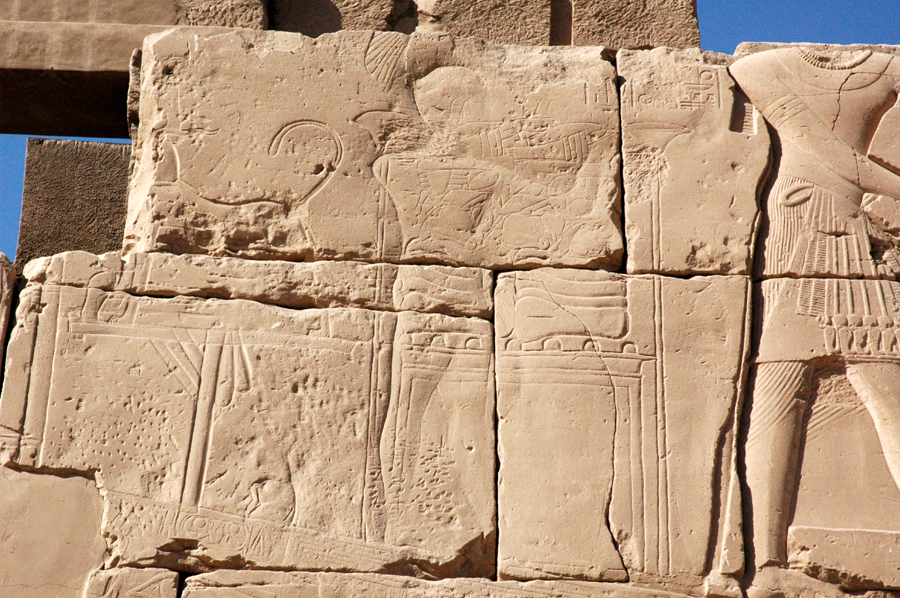
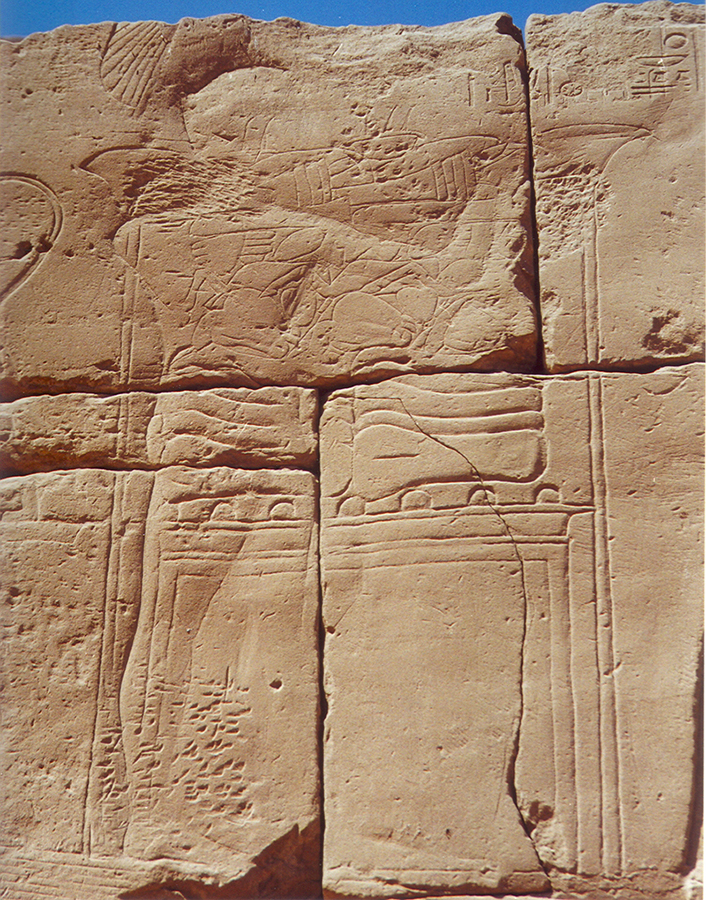
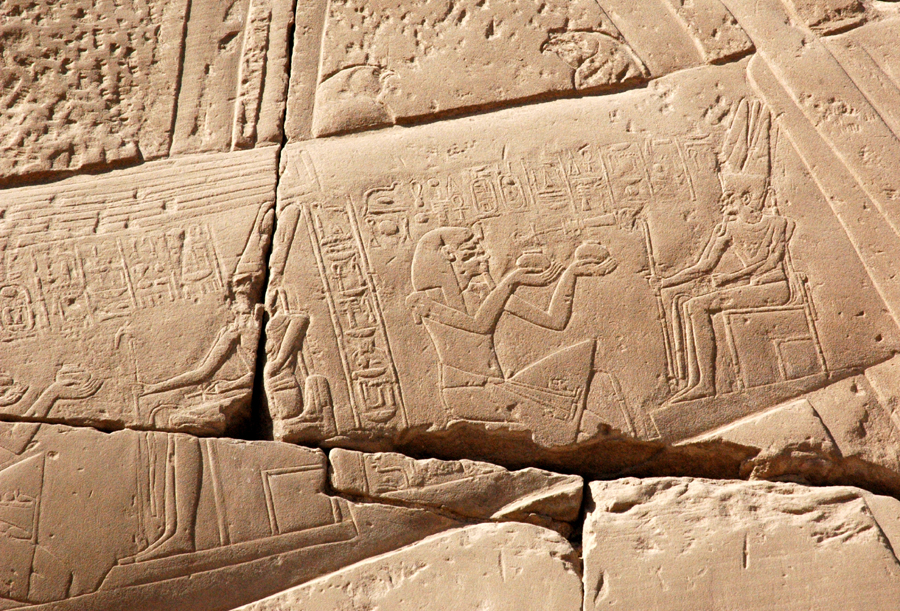
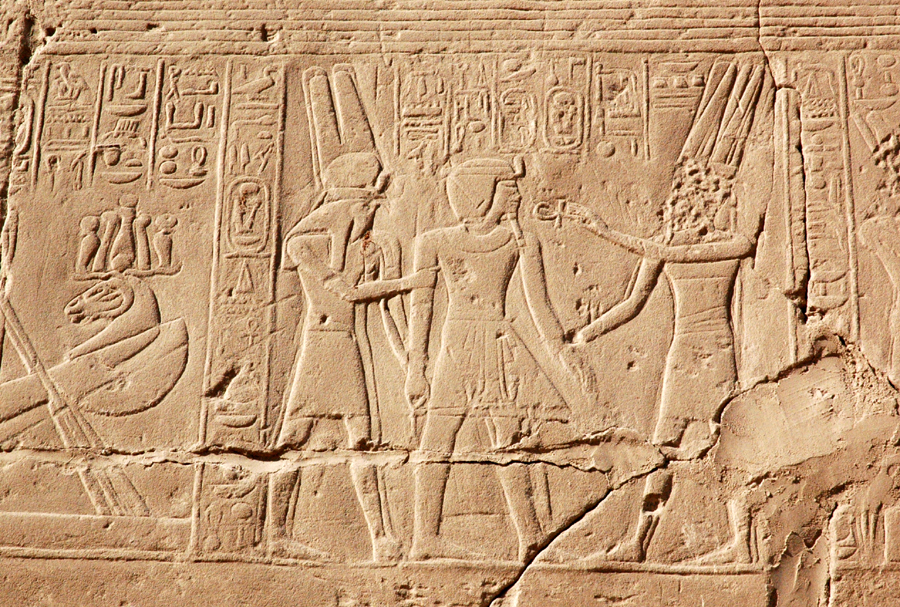
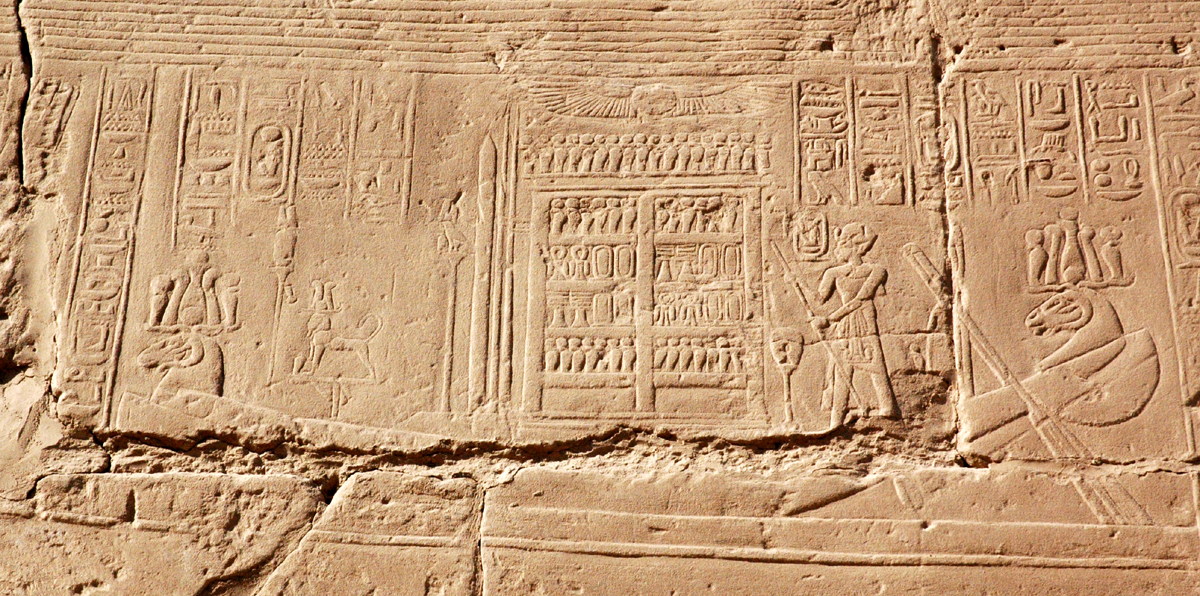
The inscriptions on the Third Pylon are not without interest. On the rear wall of the north tower is a huge scene showing the great gilded barge of the god Amen-Re being towed by the king's barge. Amenhotep III appears twice on either side of the temple-like cabin which held the portable shrine of the god when it was transported by Nile from Karnak to Luxor or to the west bank.
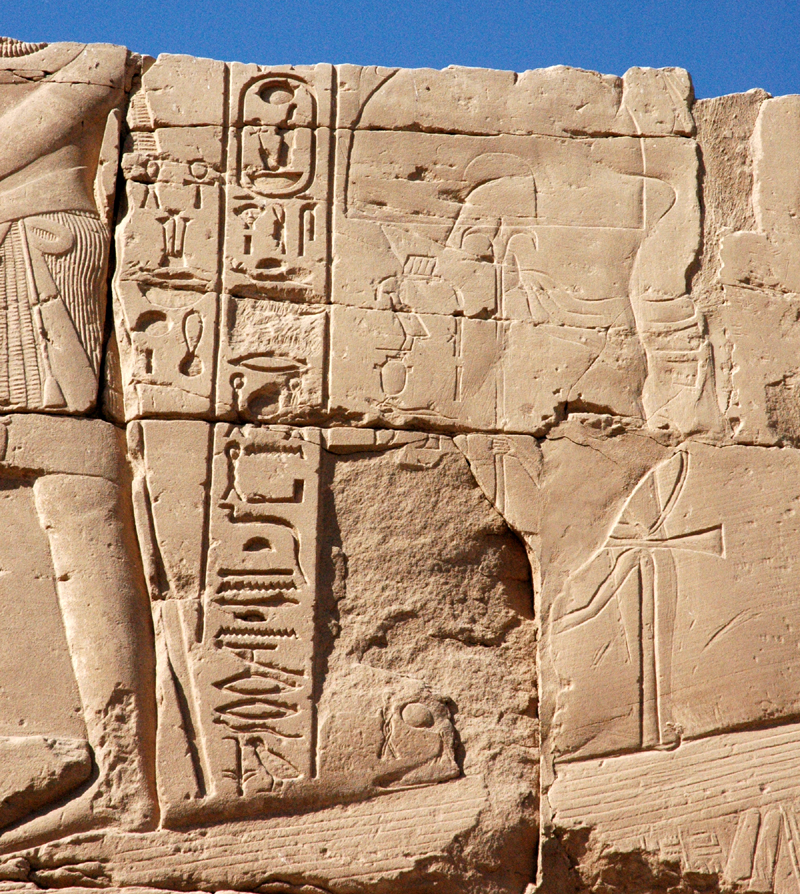
Behind Amenhotep III in both cases are the shadowy traces of two more royal figures which were later erased. A fierce debate about these erased images has raged for decades among Egyptologists. Some believe them to be Akhenaten (ca. 1352-1336 BCE) from the beginning of his reign, and evidence for a coregency (i.e., joint reign) between Akhenaten and Amenhotep III. Other scholars doubt this.
The matter was effectively settled by the late William J. Murnane, who closely inspected the erased reliefs and found traces of the royal cartouches that best suit Tutankhamen and Akhenaten not at all. Tutankhamen (ca. 1336-1327 BCE) tried to associate himself with his grandfather Amenhotep by repairing the damage to these reliefs by Akhenaten during the Amarna period and inserting his own image next to Amenhotep's.
Further proof of this came to light when Peter Brand discovered that images of the gods on the hull of the barge had been restored twice in the post-Amarna era. Elsewhere, the same pattern of double restorations occur when Horemheb (ca. 1323-1291 BCE) or Seti I had Tutankhamen's repairs made over again; an example of Ancient Egyptian "political correctness."
|