
Undergraduate Course Descriptions
Fall 2026
Need more info?
For the most up-to-date list of classes offered, visit the dynamic schedule. For questions about classes, consult our undergraduate advising page or contact the listed instructor. To see what we'll be offering in future semesters,
visit our two-year course rotation template. Interested in studying literature, taking a writing workshop, improving your writing
skills, or brushing up your teaching skills, but don't want to pursue a degree? You
should apply as a Non-Degree Seeking Student.
Jump to:
- African American Literature Courses
- Applied Linguistics/TESOL Courses
- Creative Writing Courses
- Literature Courses
- Professional Writing Courses
- Honors & Internships
Click on each course title to read the professor's full course description; click on each thumbnail image to view the course flyer.
General Education Requirements:
ENGL 1010 - English Composition (multiple sections; online courses available)
Practice in expository writing with emphasis on content, organization, and style (levels
of usage and sentence structure) for different purposes and audiences.
ENGL 1020 - English Composition/Analysis (multiple sections; online courses available)
Practice in expository writing that synthesizes ideas from various readings. Includes
library work and production of documented papers.
ENGL 2201 - Literary Heritage (multiple sections; online courses available)
Major texts of literary heritage; modes of literary expression and cultural context;
emphasis on works as products of their historical contexts and as processes shaping
human consciousness.
2201.003 - Literary Heritage: LGBTQ+ Literature | Prof. Kim Payne | MWF 9:10-10:05
2201.007 - Literary Heritage: Creative Writing | TBA | MWF 11:30-12:25
ENGL 2202 - Literary Heritage: African American Literature (multiple sections; online
courses available)
Consideration of major texts of literary heritage with emphasis on African-American
culture; modes of literary expression and cultural context; emphasis on work as products
of historical contexts and as processes shaping human consciousness.
African American Literature:
 ENGL 4372 - African American Authors and the Harlem Renaissance | Dr. Shelby Crosby
| TR 11:20-12:45
ENGL 4372 - African American Authors and the Harlem Renaissance | Dr. Shelby Crosby
| TR 11:20-12:45
The Harlem Renaissance was a period of literary and artistic vibrancy for African
Americans. It is marked by the outpouring of work by and about black folks. In 1925,
Alain Locke coined the term the New Negro as a way to discuss and understand the emergence
of a new black urban consciousness. The Harlem Renaissance is often referred to as
the New Negro movement. In this course we will explore how black women writers engaged
with the Harlem Renaissance. How did they respond to not only being black but being
a woman? Were their concerns different than their male counterparts? Remember, Zora
Neale Hurston claims that “de nigger woman is the de mule of the world.” May be repeated for maximum of 6 hours credit with change in course content.
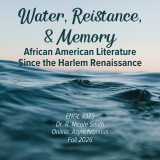 ENGL 4373 - African American Authors Since the Harlem Renaissance | Dr. R. Nicole
Smith | Online
ENGL 4373 - African American Authors Since the Harlem Renaissance | Dr. R. Nicole
Smith | Online
ENGL 4373 offers an in-depth study of two or three authors since 1930, focusing on
relationships among them and comparing their aesthetics. This semester, students will
engage a critical book and speculative fiction texts that explore connections between
water’s capacity to hold memories and Black women’s roles in resistance. As we read
and discuss these texts, we will consider the following question: In what ways do
the assigned readings reflect connections among water, Black women’s resistance, and
memory? May be repeated for maximum of 6 hours credit with change in course content.
Applied Linguistics/TESOL:
ENGL 3501 - Modern English Grammar | Dr. Lindsay Helms | MW 12:40-2:05
Introduction to current grammatical theory; description of sounds, word structures,
syntax, and semantics of English within theoretical frameworks.
ENGL 3511 - Intro to Linguistics | Dr. Lyn Wright | Online
Introduction to the nature and functions of human language, to its structural principles,
and to its place in culture and society; emphasis on language diversity and change
through history and contact; discussion of language and thought, origin of language,
and other topics.
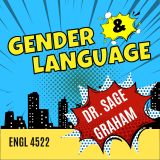 ENGL 4522 - Gender and Language | Dr. Sage Graham | TR 1:00-2:25
Topics include cultural norms and expectations, stereotypes and superheroes, gendered
im/politeness, gender in advertising, and swearing and gender.
ENGL 4531 - Methods & Techniques in ESL | TBA | Online
This class is designed to introduce methods and techniques of teaching English as
a Second Language in various settings. It examines our current understanding of second
language acquisition and the varying methods and techniques used to teach language
skills to students of English at the K-12 level and in intensive and immigrant programs
in the U.S. and overseas. The purpose of this course is to provide knowledge and experience
that will help you to better analyze learning situations, enhance your professional
skills, and increase your ability to promote learning.
 ENGL 4533 - ESL/EFL in Multicultural Settings | Dr. Rebecca Adams | Online
Approaches to working with ESL or EFL students in multicultural settings. Upon completion
of this course, students will be able to engage with bilingual and translanguaging
practices for equitable teaching, articulate classroom management plans that address
social justice and advocacy concerns for diverse learners, discuss the importance
of cross-cultural issues in teaching mathematics, sciences, and literacy, and more!
Creative Writing:
 ENGL 3606 - Poetry Writing | Dr. Kendra Vanderlip | TR 11:20-12:45
Calling all poets! ENGL 3606 is an introductory class for anyone who wants to learn
more about writing and reading poetry. Students will learn the conventions of the
genre through close reading, analysis, creative practice, and constructive critique
studying contemporary selections of poetry to analyze the use of style, structure,
and figurative language. We will compose poems throughout the semester with guided
prompts, culminating in a portfolio at the end of the semester showcasing the writer’s
growth and understanding of poetic conventions.
ENGL 3607.001 - Fiction Writing | TBA | TR 1:00-2:25
Exploration of the creative process within the forms and traditions of fiction. Emphasis
on the student’s own work.
ENGL 3607.002 - Fiction Writing | TBA | MW 12:40-2:05
Exploration of the creative process within the forms and traditions of fiction. Emphasis
on the student’s own work.
ENGL 4600 - Creative Nonfiction Workshop | TBA | MW 2:20-3:45
Nature of nonfiction, critical approaches to the genre; practical experience in writing
and revising text. May be repeated for a maximum of 6 hours credit with permission of instructor.
 ENGL 4601 - Poetry Workshop | Dr. Kendra Vanderlip | TR 1:00-2:25
This course places heavy emphasis on workshop and reading in preparation for workshop.
The theme of this workshop class will revolve around erasure and found poetry projects.
In addition to focusing on the student’s own work, we will develop shorter projects
around erasure and/or found poetry readings. Workshops will focus on developing content
in conversation with the larger goals of the project, and how theme, craft and voice
all work in conversation with one another while composing. Students will build their
writer toolkit through class discussion and analysis, equipping students with a detailed
understanding of the craft of literary poetry writing.
 ENGL 4603 - Fiction Workshop | Dr. Eric Schlich | MWF 11:30-12:25
This class focuses on the creation and evaluation of contemporary short fiction. Students
will study craft essays, journal about and present on writing techniques from an anthologized
short story, workshop two complete story drafts, revise one story, and write a craft
review of a contemporary short story collection of their choosing. May be repeated for maximum of 6 hours credit with permission of instructor.
 ENGL 4604 - Forms of Poetry | Dr. Kendra Vanderlip | TR 2:40-4:05
The goal of this course is to engage with different forms in the poetry world, with
special emphasis on prose poems and how they continue to evolve in the poetic genre.
Major projects for this class will include composition of poems in different forms,
small group workshops and close reading analysis to better understand the marriage
between form and content. Studies will culminate with an end of term paper, detailing
an understanding of form in poetry in contemporary conversations.
 ENGL 4605 - Forms of Fiction | Dr. Eric Schlich | MW 12:40-2:05
This forms class will study foundational fairy tales by the Brothers Grimm, Charles
Perrault, and Hans Christian Andersen as sources of inspiration for new original fiction.
Students will write an analysis of a fairy tale of their choosing, present on a fairy
tale retelling from the anthology, complete fairy tale exercises, and expand one exercise
into a full story draft to be workshopped and revised.
Literature:
 ENGL 3105 - Law & Literature (Special Topics) | Dr. Andrew Donnelly | TR 9:40-11:05
What do literary texts tell us about the law and what do legal texts tell us about
literature? This course will explore how literature represents legal issues, contemplates
problems of morality, and challenges ideas about justice. With a focus on U.S. legal
history, and American authors such as Edgar Allan Poe, Herman Melville, Charles Chesnutt,
and Louise Erdrich, this course is designed especially for students interested in
how literary works think about politics, rights, justice, race, and constitutional
issues; for aspiring writers; or for those preparing for careers in the law or criminal
justice.
 ENGL 3210 - British Literature to 1750 | Dr. Joshua Phillips
From monsters to demons to lovers, this course explores the literary imagination of
Britain’s best and most creative writers, from the Middle Ages to the 18th century. In
this class, we will focus on how language, history, religion, and creativity combined
to produce powerful works of wonder, terror, and beauty that have influenced the world
for centuries. In surveying this period, the course attends to the shifting representations
of war, gender, race, humor, and human connection. Our focus will be on improving
students’ skills in critical thinking, focus, writing, analysis, and creativity.
ENGL 3220 | Dr. Jeff Scraba | MWF 11:30-12:25
Survey of major authors, themes, and movements from the Romantic period through the
present.
ENGL 3327.001 - American Literature to 1865 | Dr. Chris Black | TR 9:40-11:05
Survey of major authors, themes, and movements in American literature from the colonial
period through 1865.
3327.M51 - American Literature to 1865 | Dr. Theron Britt | Online
Survey of major authors, themes, and movements in American literature from the colonial
period through 1865.
 ENGL 3401.002/350 - Children's Literature *honors embedded* | Dr. Lorinda Cohoon |
MWF 10:20-11:15
ENGL 3401.002/350 - Children's Literature *honors embedded* | Dr. Lorinda Cohoon |
MWF 10:20-11:15
This course explores how children’s books, both historic and contemporary, convey
the spaces and places of childhood adventure through words and art. This course is
a survey of children’s literature. You will be introduced to authors and texts that
have defined the field of children’s literature. You will discuss children’s books
and write about how children’s literature shapes and reflects cultural ideas about
children and childhood. You will develop knowledge of children’s books and children’s
authors and illustrators, and you will learn about the history of children’s literature
as well as contemporary issues in the field of children’s literature and demonstrate
this knowledge in discussions, exams and quizzes, presentations, and papers.
 ENGL 3404 - Studies in Popular Texts | Dr. Carey Mickalites | TR 1:00-2:25
Do you ever feel like you’re living in a dark, “dystopian” time? You’re not alone!
Dystopian tales, stories that give form and expression to our collective fears, have
long enjoyed a popular status. And yet maybe part of that popularity comes not only
from the “relatability” of all that is horrific about the human experience, but for
the way dystopian fantasies often contain utopian possibilities, thereby summoning
our desire for a better world, for alternative futures that are not foredoomed by
historical realities like authoritarianism, racism and sexism, or even the apparent
inescapability of capitalism’s destructive tendencies. In other words, we will spend
some time reveling in texts that deal with our darkest fears, while asking how they
point to the possibility of a better world. May be repeated for a maximum of 6 hours credit with a change in course content.
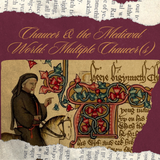 ENGL 4230 - Chaucer and the Medieval World: Multiple Chaucer(s) | Dr. Cristina Maria
Cervone | TR 11:20-12:45
ENGL 4230 - Chaucer and the Medieval World: Multiple Chaucer(s) | Dr. Cristina Maria
Cervone | TR 11:20-12:45
This course reads Chaucer through a variety of critical lenses that have proved productive
(or not),emphasizing recent important work in medieval studies that prompts us to
ponder how ideologies and contemporary conversations influence how we read and how
our blindspots might affect our interpretations of the past. Topics include, for example,
current conversations on ethics in medieval studies, feminist readings, queer readings,
cognitive approaches, animal studies, materiality, manuscript contexts, and present-day
poets’ interest in Middle English and Chaucer. If you have no experience with medieval
literature or presume Chaucer is old-fashioned or irrelevant, his amazing poems will
show you what you have been missing and why so many readers today love his work. Prior
knowledge of Middle English is not expected; coursework will include language practice
as well as close analysis of poetic forms.
 ENGL 4451 - Women Writing Against Erasure: Voice, Myth, and Memory | Prof. Veverly
Edwards | MW 12:40-2:05
ENGL 4451 - Women Writing Against Erasure: Voice, Myth, and Memory | Prof. Veverly
Edwards | MW 12:40-2:05
This course explores how women writers reclaim voice, revise myth, and preserve cultural
memory in response to historical and cultural erasure. Through fiction, poetry, and
essays from diverse cultural traditions, students will examine how authors challenge
silence, reinterpret inherited narratives, and tell stories often excluded from dominant
histories. Readings will include works by Zora Neale Hurston, Toni Morrison, Sandra
Cisneros, and Madeline Miller. Emphasis will be placed on close reading, critical
discussion, and the relationship between literature and cultural memory.
Professional Writing:
ENGL 3601 - Intro to Technical & Professional Writing | Multiple sections offered,
online and honors available
Introduction to rhetoric and style of documents written by scientists, engineers,
technical writers, and other professionals; extensive practice in writing reports,
proposals, manuals, and correspondence.
3601.001 | TBA | TR 1:00-2:25
3601.M50 | Prof. Terry Ansbro | Online
3601.M51 | Dr. Chloe Robertson | Online
ENGL 3602 - Professional Editing | TBA | Online
Workshop in techniques of editing effectively in academic, industry, government, literary,
and research settings; developing practical genre familiarity for printed and online
formats within those areas.
ENGL 3603 - Engineering Communications | Multiple sections offered, online sections
available
Form and contexts of written and oral communications in engineering professions; extensive
practice in oral reporting, written reports, manuals, and proposals. Does not apply to the English major or minor.
3603.001 | Dr. Chloe Robertson | MWF 10:20-11:15
3603.003 | Prof. Calen Verbist | TR 9:40-11:05
3603.004 | Prof. Calen Verbist | TR 11:20-12:45
3603.M50 | Dr. Adam Sneed | Online
ENGL 3604 - Persuasive Writing | Multiple sections offered, online sections available
Study and practice of writing essays and reports with emphasis on persuasion; introduction
to empirical and library research, application of rhetorical principles, and nature
of evidence, including numerical; academic and professional writing, editing, and
revision.
3604.001 | TBA | TR 11:20-12:45
3604.M50 | Prof. Terry Ansbro | Online
3604.M51 | Dr. Joseph Jones | Online
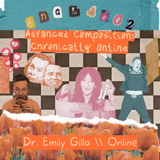 ENGL 4602 - Advanced Composition: Chronically Online | Dr. Emily Gillo | Online
This course explores how writing shapes (and is shaped by) online culture. In this
class, we’ll analyze viral trends, deep dive into various online communities, take
a critical look at misinformation, “AI slop,” and digital content ethics, and practice
cultural explainers about various internet goings-on. Through rhetorical analysis,
expository writing, and research based argumentative writing, we will develop clear
and persuasive prose for a variety of contemporary audiences. The semester will end
with a DIY digital zine project that remixes your writing in this class into an accessible
multimodal publication that expresses both your authentic rhetorical voice and personal
design aesthetic.
 ENGL 4618 - Document Design | Dr. Chloe Robertson | Online
ENGL 4618 takes a theoretical approach towards visual and written communication, honoring
the interrelationship between visual and verbal elements present in documentation.
In other words, we will interrogate how documents are designed to be both visually
and verbally appealing for audiences while conveying the necessary information clearly
and artfully. We will then apply what we have learned to create our own documents,
practicing what it means to be thoughtful authors and designers in solo and collaborative
settings.
ENGL 4620 - Digital Rhetoric & Writing | TBD | Online
This course focuses on contemporary theories and practices in digital rhetoric and
writing, preparing students entering both the academic field and the private sector
with scholarship and trends surrounding digital rhetoric.
Honors & Internships:
ENGL 4640 - Internship in English | Rachel Cantrell | TBA
Experience with a local community partner requiring the assistance of English majors
with strong oral and written communication skills. Dependent upon availability. Visit our internships page for more information.
ENGL 4996 - Honors Thesis | Dr. Cristina Maria Cervone | TBA
Students engage in individual, intensive study of a unique problem or issue in English
Studies, culminating in a long piece (approx. 40 pages) of scholarly writing. Visit our English honors page for more information.