
School of Public Health
Faculty Spotlight - Dr. Ricky Chi Yeung Leung
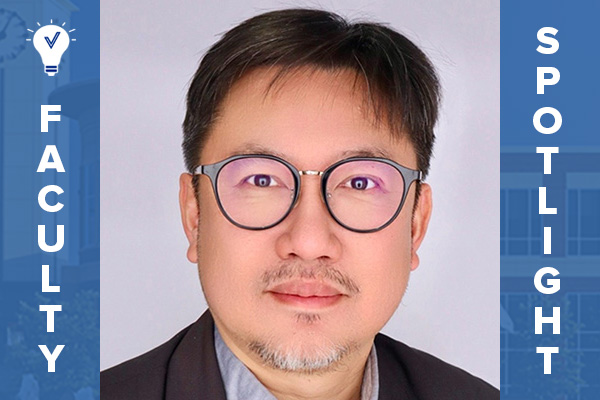
Q&A with Dr. Ricky Chi Yeung Leung, PhD, MPhil, MS, BA
Director and Professor, Division of Social and Behavioral Sciences
- What brought you to the U of M School of Public Health?
I came to the University of Memphis School of Public Health to lead the Social and Behavioral Sciences Division, build the Center for Responsible AI and contribute to other AI initiatives across campus. This role brings together my passions for research, teaching and program development to address pressing health challenges locally, nationally and globally. UofM’s collaborative spirit, innovative environment and commitment to applied research made it the ideal place to continue my work. - What is the broad focus of your research?
My most recent work focuses on combining artificial intelligence (AI), machine learning (ML) and technological innovation to solve real-world public health problems. I aim to design tools that deliver accurate insights while being practical to implement in different healthcare systems worldwide. - What inspired you to pursue this particular area of research?
I have always been fascinated by the potential of technology, but I also noticed how often powerful tools fail to reach the communities that could benefit most. Early in my career, I realized the challenge isn’t just building sophisticated algorithms—it’s making sure they work in real-world environments. For me, it’s never been about jumping on the latest bandwagon or hype—whether it’s nanotechnology, genomics, or social media—but about focusing on what will be genuinely useful and impactful in practice. That understanding continues to guide my approach to bridging technological innovation with public health. - What is the most exciting project you are currently working on?
I am currently leading the NIH-funded AI for Health Research Lab at UofM. Our team is developing AI models to improve prevention and treatment for substance use disorder, with a focus on disadvantaged populations. We design these tools for integration into both clinical and community health programs, ensuring they are transparent, reliable and ready for use in everyday practice. - How does your research impact or benefit the broader community or public health field?
And how do you envision your research evolving in the next few years?
My work focuses on making advanced technology a practical asset for public health. That means creating solutions that address urgent health problems and are usable by the organizations that need them most. In the next few years, I plan to expand into mental health, maternal and child health, aging and even ventures in healthy food and drug/supplement development for substance use disorder and other patient populations. I also intend to test and adapt our approaches across different countries and healthcare system. - What is the coolest training or program you've been a part of, or your favorite conference
you've attended?
The NIH AIM-AHEAD program has been a standout. It provides excellent training and collaboration opportunities in AI and ML for health research and it has been especially valuable for my students and lab members. Seeing them apply their new skills and succeed in their own projects is one of the most rewarding parts of my work. - What is your favorite self-authored manuscript?
My favorite right now is my upcoming book, Leveraging Generative AI for Machine Learning Education in Public Health. It brings together my research and teaching experience to help students and professionals develop practical ML skills using generative AI tools. - What kind of research would you like to be doing that you haven't yet had the opportunity
to do?
I would like to explore how small businesses and community health organizations can use AI and ML to improve productivity, wellness and service delivery. This includes applying technology to healthy food initiatives and to drug/supplement development for substance use disorder and other patients. The goal is to create scalable, effective models for organizations with limited resources but significant community impact. - Are there any publications, awards, or recognitions you would like us to include in
the spotlight?
- Principal Investigator, NIH-funded AI for Health Research Lab (Award No. 1OT2OD032581-01)
- Upcoming book: Leveraging Generative AI for Machine Learning Education in Public Health