
The Benjamin L. Hooks Institute for Social Change
The Benjamin L. Hooks Institute for Social Change




Advancing Social Change and Strengthening Democracy Through Research, Service and Historical Preservation.
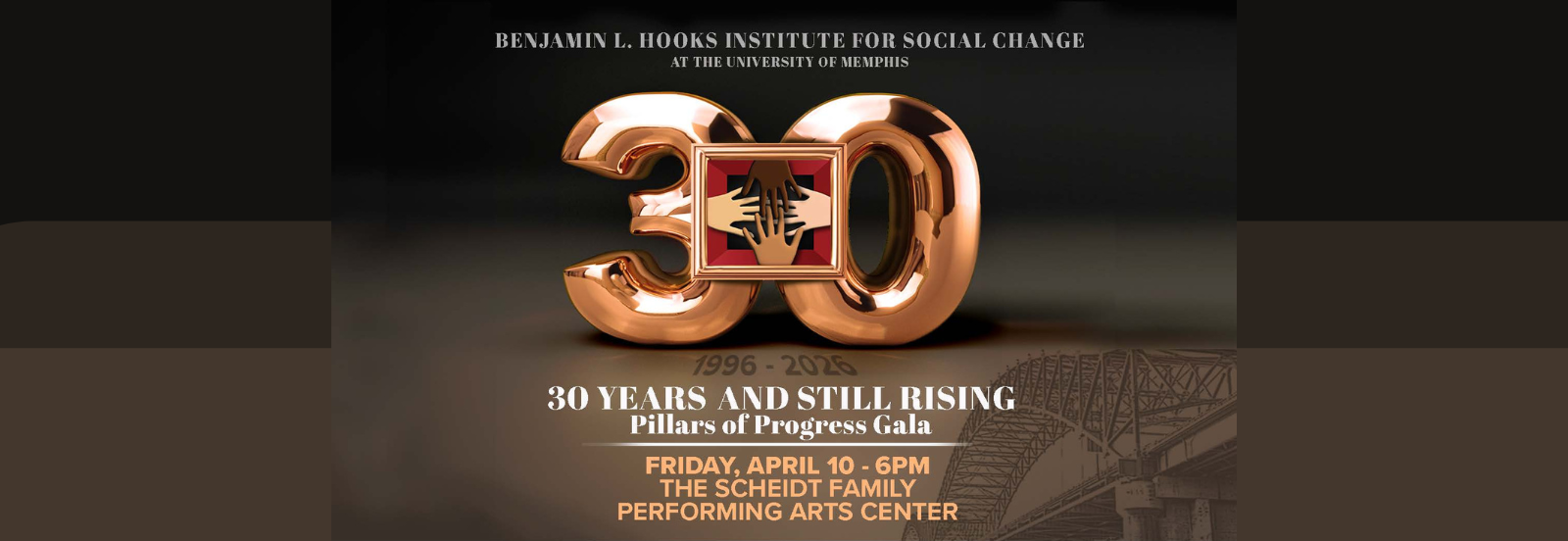
Our 30th Anniversary Gala!
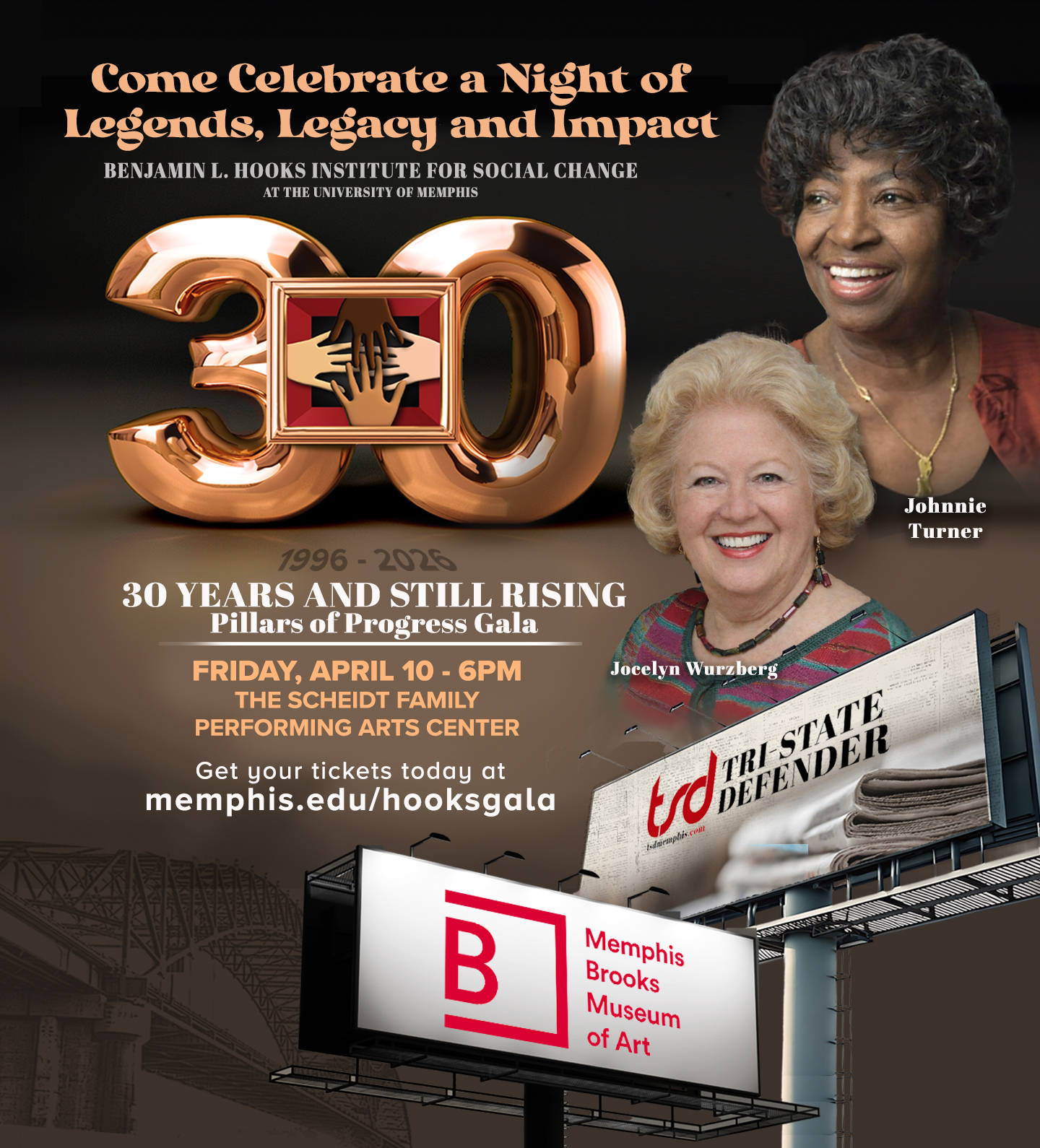
Celebrate 30 Years of the Benjamin L. Hooks Institute for Social Change with live music, food, & our 2026 Pillars of Progress Award Winners
For 30 years, the Hooks Institute has united partners from the public, private, nonprofit, and university sectors to take on challenges that hold communities back — from poverty and barriers to good health, to gaps in opportunity and education. We champion civil rights scholarship, preserve history, prepare University of Memphis students for bright, successful futures, and work with communities to solve community problems.
Our progress has been made possible by a powerful community of supporters — generous donors, dedicated staff, and visionary partners — who believe in Memphis and in the promise of social change.
As we mark our 30th anniversary in 2026, we remain committed to bold, innovative work that transforms lives. We are 30 years and still rising — and we invite you to rise with us to build a Memphis where everyone can reach their full potential.
Join us in our celebration! Tickets are available now at memphis.edu/hooksgala!
A great community requires many pillars to support the whole.
The Hooks Institute honors the 2026 Pillars of Progress:
The Memphis Brooks Museum of Art. Honored for its community outreach efforts and art exhibitions that explore to the cultural interest and lived experiences of all Memphians.
The Tri-State Defender. From 1951 to present, this newspaper has been the voice of African American life in Memphis—past, present, and future.
The Hon. Johnnie Turner. A fearless 1960s civil rights activist and longtime educator served Memphis as State Representative for District 85 from 2010 to 2018.
Ms. Jocelyn Wurzburg. Co-founder of the Panel of American Women after Dr. Martin Luther King Jr.’s 1968 assassination to promote healing and racial unity in Memphis.
CLICK HERE to purchase tickets today!
Announcing the 2026 Hooks Policy Papers
In this Tenth Edition of the Hooks Policy papers, researchers from the University of Memphis’s Loewenberg School of Nursing and the UT Health Science Center and present findings from an NIH-funded grant on breast health in segregated communities in Memphis. Looking into the impacts of various social determinants of health, the research reveals that Black women living in segregated communities experience higher breast cancer mortality rates when compared to White women living in segregated communities.
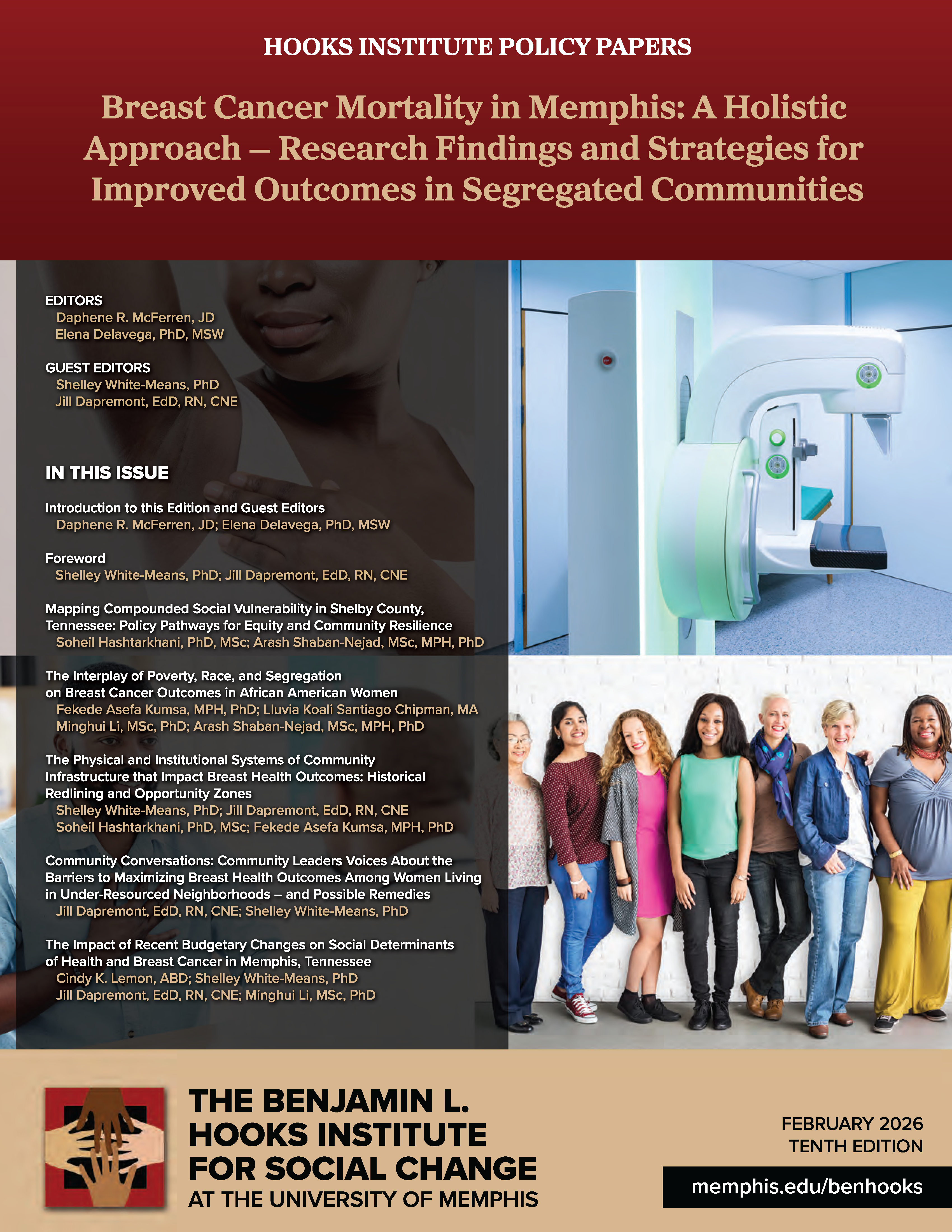
Mapping Compounded Social Vulnerability in Shelby County, Tennessee: Policy Pathways
for Equity and Community Resilience
Soheil Hashtarkhani and Arash Shaban-Nejad
The Interplay of Poverty, Race, and Segregation on Breast Cancer Outcomes in African
American Women
Fekede Asefa Kumsa, Lluvia Koali Santiago Chipman, Minghui Li, and Arash Shaban-Nejad
The Physical and Institutional Systems of Community Infrastructure that Impact Breast
Health Outcomes: Historical Redlining and Opportunity Zones
Shelley White-Means, Jill Dapremont, Soheil Hashtarkhani, and Fekede Asefa Kumsa
Community Conversations: Community Leaders Voices About the Barriers to Maximizing
Breast Health Outcomes Among Women Living in Under-Resourced Neighborhoods – and Possible
Remedies
Jill Dapremont and Shelley White-Means
The Impact of Recent Budgetary Changes on Social Determinants of Health and Breast
Cancer in Memphis, Tennessee
Cindy K. Lemon, Shelley White-Means, Jill Dapremont, and Minghui Li
This edition of the Policy Papers was funded by the NIH grant, and the full papers can be viewed and downloaded for free through the Digital Commons, HERE.